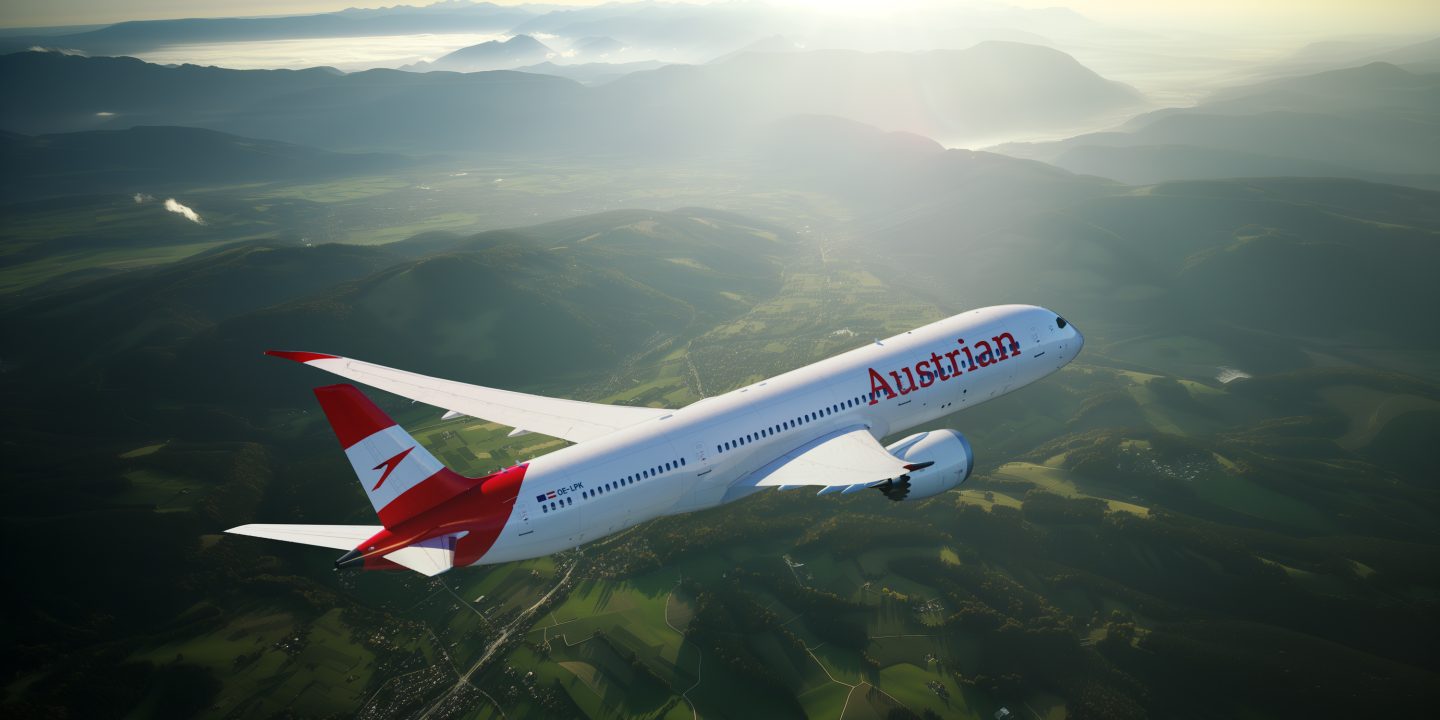
Air travel connects people, cultures and economies and is therefore an indispensable part of a globalized world. This societal and economic value must go hand in hand with the ambition to further reduce aviation’s impact on the climate and the environment. To advance lower-emission aviation, Lufthansa and the Lufthansa Group invest in new fuel-efficient aircraft, support the use of Sustainable Aviation Fuel (SAF) and continuously improve operational efficiency.

Additionally, we give customers the opportunity to support concrete measures that contribute to saving CO2 emissions. These include the use of additional Sustainable Aviation Fuel (SAF) on future flights and, additionally, the support of selected climate protection projects that contribute to CO₂ avoidance or removal.
Let’s make a difference. Simply book your contribution with your next trip.
Your options to support SAF and climate protection projects
Book your flight and support measures for CO₂ saving emissions. With your contribution, you support the additional use of Sustainable Aviation Fuel (SAF) within the Lufthansa Group’s network within six months after your flight, as well as selected climate protection projects. The contribution corresponds to the estimated CO₂ emissions of your flight. Flying has further impacts on the climate beyond CO₂ emissions.
You can also make a contribution for flights that have already been completed – easily and at any time. Your support will go towards a combination of using Sustainable Aviation Fuel (SAF) and promoting selected climate protection projects.
Depending on your destination, you can contribute to either during the booking process or after you have already completed your journey by selecting a package to save CO₂ emissions. Alternatively, you have the option of choosing a so-called “Impact Fare" when selecting your fare.
Lufthansa generally offers you two options to contribute to saving CO₂ emissions:
- Supporting the use of Sustainable Aviation Fuel (SAF) for future flights corresponding to a defined share of the estimated CO₂ emissions of your flight.
- Support for certified climate protection projects equivalent to the remaining estimated CO₂ emissions of your flight.
The Lufthansa Group guarantees that the SAF will be phased into flight operations within six months after your flight.
Your options to support lower-emission aviation and climate protection
Sustainable Aviation Fuel (SAF) is an alternative jet fuel made from renewable energy sources, such as used cooking oils and fats or from agricultural waste. While SAF generates comparable CO₂ emissions to conventional kerosine during combustion, the SAF used by Lufthansa Group achieves at least 80% lower lifecycle greenhouse gas emissions on average. To contribute to saving CO₂ emissions, we calculate the fuel required based on the estimated CO₂ emissions and ensure that exactly this amount of SAF is used on future Lufthansa Group flights.
Your contribution funds additional SAF beyond the EU-mandated 2% quota already included in ticket prices via the Environmental Cost Surcharge. The amount is calculated based on your estimated flight-related CO₂ emissions and used on future Lufthansa Group flights within six months of your flight, though not on your own flight. Parts of Lufthansa Group's SAF purchases have received EU ETS support.
SAF feedstocks do not compete with food production and must meet strict EU sustainability criteria under RED II and ReFuelEU Aviation, verified by independent auditors. SAF currently accounts for less than 1% of global aviation fuel consumption and around 1.5% of Lufthansa Group's fuel use (2025), while it costs about three to five times more than fossil fuel. Customer-funded SAF represents only a portion of these purchases. The Lufthansa Group is involved in numerous projects to ensure that SAF becomes available in larger quantities as quickly as possible.
While SAF contributes to lower lifecycle emissions, aviation continues to have a significant climate impact, including effects beyond CO₂.
The Lufthansa Group climate protection portfolio includes projects in Europe and worldwide in collaboration with the providers myclimate, First Climate, Ceezer and senken. These projects aim that CO₂ emissions are either avoided or removed from the atmosphere, include carbon farming in Germany, the introduction of energy-saving cookers for people in African countries, or converting biomass into a charcoal-like product, so-called biochar. Additionally, Lufthansa Group supports the scaling of new technologies, which filters CO₂ directly from the ambient air and stores it for centuries in geological spaces.
Since such projects have complex ecological and social interdependences, the actual climate benefits of these projects may vary due to uncertainties regarding their effectiveness, permanence and verification. To ensure their quality and impact, projects are carefully selected and assessed against recognized international standards such as Gold Standard and Puro.Earth, or European standards such as Carbon Standards International (CSI) and ISO 14064.
These projects contribute to climate protection outside the aviation sector and do not directly reduce or neutralise the emissions of your individual flight.
CO₂ emissions and climate impact
Estimating the flight-related CO₂ emissions per passenger
Burning kerosene in engines creates carbon dioxide, more commonly known as CO₂, a greenhouse gas that contributes to climate change. Lufthansa offers travelers the opportunity to support the use of Sustainable Aviation Fuels (SAF) and, in addition, certified climate projects.
The CO₂ emissions figure estimated per passenger is based on a number of influencing variables. In order to determine the most accurate value possible, the Lufthansa Group uses a data-based model that was developed in collaboration with the climate protection organization myclimate, and which has access to a large database of historical flight data. Some of the influencing variables used to estimate a CO₂ value per passenger include the flight route, the average fuel consumption along this route, the travel class and the seat occupancy rate.
Taking non-CO₂ effects into account
The greenhouse gas CO₂ isn’t the only type of emission to occur as a result of burning kerosene in engines; emissions such as water vapour, nitrogen oxides and very fine soot particles are also a consequence. These emissions are called non-CO₂ emissions.
According to the latest science, the overall impact of aviation on global warming isn’t limited to just the effect produced by the CO₂ emissions; the non-CO₂ emissions can also have an effect on the climate. The most significant in this respect are long-lasting vapour trails, which occur on a very low number of flights in very specific climatic conditions. These long-lasting vapour trails can have a warming or cooling effect on the atmosphere, depending on the conditions in which they occur.
At the moment, there isn’t enough research on the precise effect of non-CO₂ emissions on the climate. As a result, the Lufthansa Group doesn’t currently include non-CO₂ effects in its estimations on top of the CO₂ emissions calculated per passenger.
The Lufthansa Group is actively engaged in research that aims to form a better understanding of non-CO₂ effects on the climate, and is developing usable processes that will prevent them from occurring in the first place.